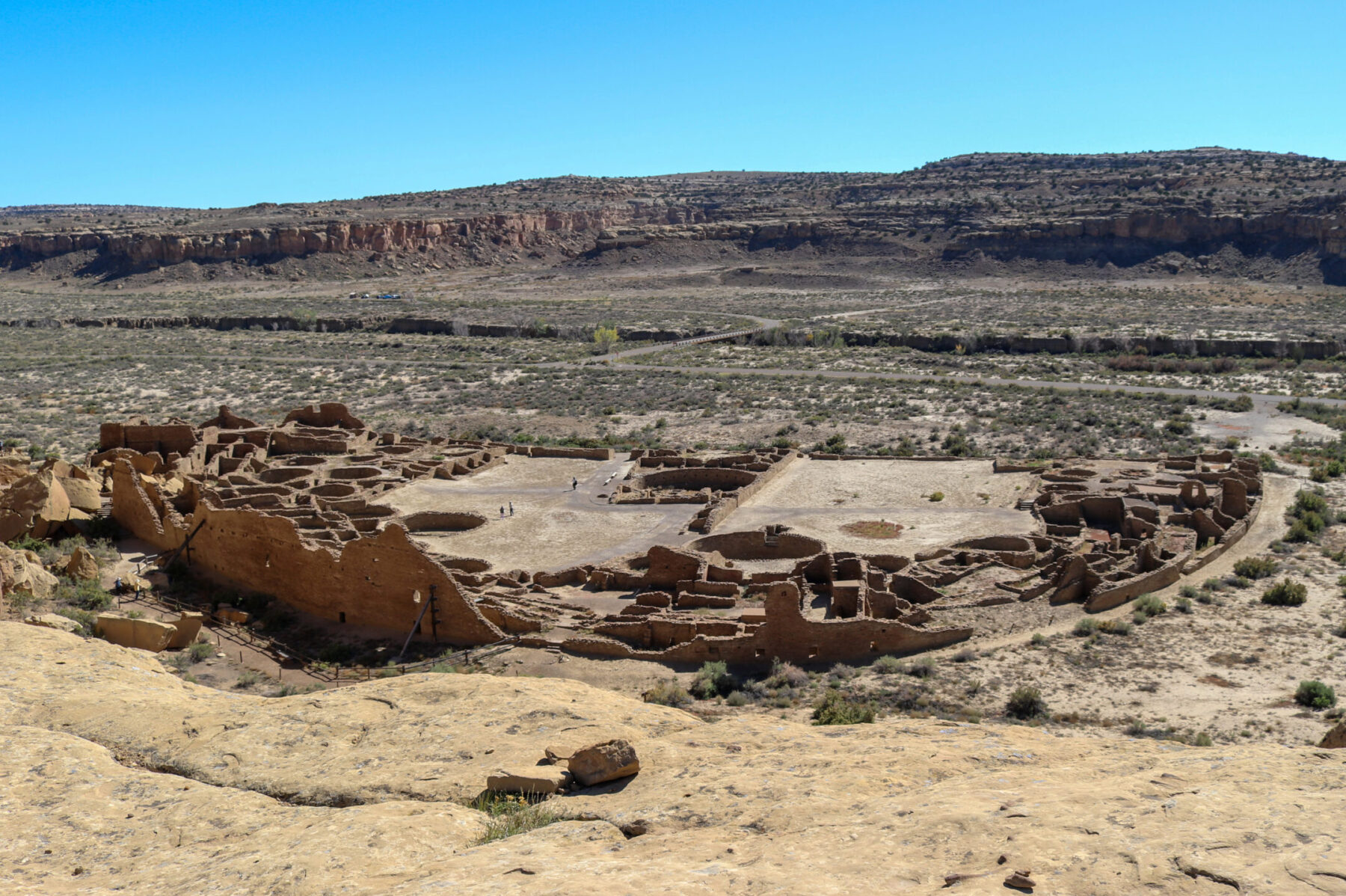
In my current position, I teach a large-lecture humanities class every semester. I’ve blogged about it before, so it is no surprise (if you’ve been following the blog) to hear that I have continuously tinkered with this class. Recently, I received a grant (exciting!) to overhaul the class (exciting?). I’ve decided that I am going to redo the entire class… Read more →

Author: LKE
Ditch the Textbook: Now what? An Experiment with StoryMap JS
In a recent post I mentioned that I was planning to ditch my textbook for my large-lecture humanities class. Instead, I am going to make podcasts and videos, and assign primary sources for students to use before or during class. It dawned on me recently that another great option would be to use StoryMap JS to introduce some material as… Read more →
The Politics of #arthistory/#arthistory as activism
Yesterday I was involved in a discussion over twitter that was initiated by @smarthistory. An initial question (how we can draw reverse the misconception of #arthistory, especially the idea that it is disconnected from politics and the world?) prompted some fascinating responses. It is a question that I often think about, especially when I am confronted with dumbfounded looks about… Read more →
To Smarthistory in the Large-Lecture Humanities Class
I’ve posted about how I see my work with Smarthistory as an act of doing public art history, and how the process of working collaboratively for smarthistory has encouraged me to rethink how I teach and how I research (and publish). Well, I am always looking for ways to transform my large-lecture humanities class of more than 200 students. The… Read more →
Transforming Reacting to the Past Games for Large-Lecture Courses
I’ve been hearing about Reacting to the Past (RTTP) games for a few years now. I’m curious to learn more. Normally, I would have attended a conference to play one of these games, like Art and Modernism in Paris in 1889, but I now normally teach large classes of more than 200 students. With so many students, I’m never sure… Read more →
CALL FOR PARTICIPATION: Edited volume on Emotions, Art, and Religion in Europe, Africa, and the Americas, c. 1400–1800
CALL FOR PARTICIPATION: Edited volume Emotions, Art, and Religion in Europe, Africa, and the Americas, c. 1400–1800 The “emotional turn” has prompted numerous studies on the history of emotions in the medieval and early modern periods. Many of these studies have been oriented towards texts rather than images, although recently visual culture, especially among medievalists, has played a more prominent… Read more →
Reflections on a being an academic mama
This post is really just me processing life at the moment. This semester I promised myself I would write a new blog post at least once a month, and yet here it is December 2017 and I’ve two drafted partial posts. The last one was in September. I remain baffled at how quickly time passes and how startlingly unaware I… Read more →
The Balancing Act of the Large Lecture Class
For any of us who have taught large lecture classes (let’s say 100+ students), we are all too familiar with the huge demands on our time and energy. I regularly teach of class of 200+ students, which for me breaks down (on average) to: 6-7 hours of office hours/appointments with students/week 6-10 hours of class prep/week (usually more, but I’m… Read more →
Student-Centered or Teacher-Centered Syllabus?
I have a confession to make: I love making syllabi. There is something exciting about planning a course from the ground up, with all its assignments, readings, and lectures to plan. What do you include or omit? What types of assignment fit well with the class? Why will Project A work better than Project B? The aspect of going on… Read more →
How do we create a field of Public Art History?
After my last post on Public Art History (PAH), I’ve continued to think about what a field of PAH might look like. With the continuing decline in academic positions, especially in the humanities, could a field of Public Art History help to develop more career options outside of academia? With a field of Public Art History, could we shift the… Read more →
What is Public Art History?
Today, over breakfast, a colleague and I touched upon the topic of Public Art History, particularly what it is in relationship to Smarthistory (a project with which we are both involved and feel passionately about developing). I once again raised the idea that there should be Public Art History, or at least a more formalized idea of what Public Art… Read more →
Using Google Sites in a Renaissance Art History Class
This past semester (Spring 2017), I decided to experiment with Google Sites in my Renaissance art history class. Originally I planned to have students create an Omeka exhibition, as I’ve done in the past, but in the spirit of adventure I decided to mix it up. I wanted to experiment with the new Google Sites myself, and I decided to once… Read more →
